On this page
Short answer: A scar camouflage tattoo uses a fine needle to place skin-toned pigment into a pale, flat, fully healed scar so it blends with the skin around it. It does not remove the scar. Cost is quoted after an in-person look at the scar, and good candidates usually have mature, light-colored scars that are no longer pink or raised.
What is a scar camouflage tattoo, exactly?
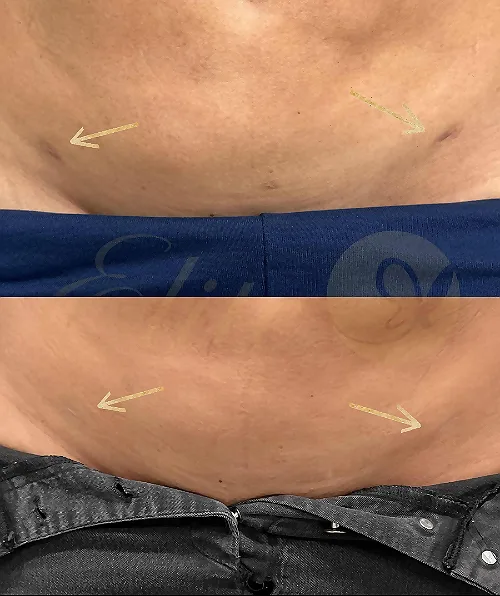
Scar camouflage is a paramedical form of cosmetic tattooing. Instead of adding a design, the artist mixes pigment to match the client’s natural skin tone and deposits it into scar tissue that has lost its color. The goal is simple: make a light line or patch harder to notice at a normal viewing distance.
It is worth being clear about what it is not. It is not scar removal, it does not change the texture of a scar, and it is not a medical treatment. A scar that is raised, ridged or deeply indented will still have that shape after camouflage. What changes is the color contrast, which is often the thing people notice most.
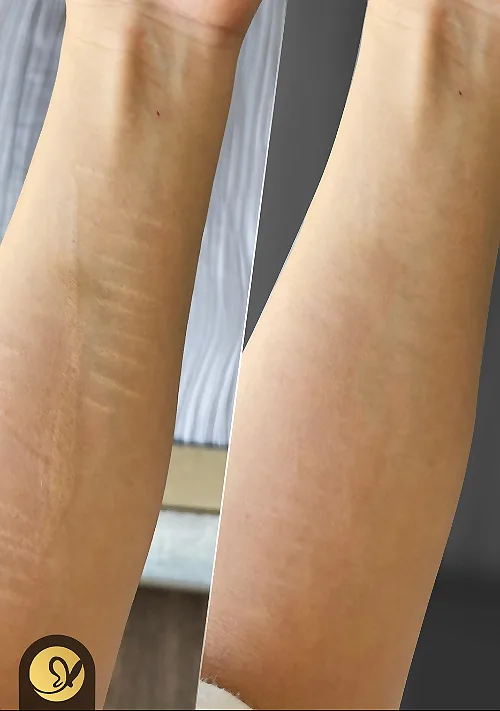
The technique is commonly used on surgical scars (tummy tuck, breast surgery, facelift and hairline scars), old injury scars, and areas of skin that lost pigment after a burn or skin graft. Elite also uses related techniques for stretch marks, which behave like scars because, as Cleveland Clinic explains, stretch marks are a form of scarring.
How does the process work, step by step?
Every artist works a little differently, but a careful scar camouflage appointment generally follows this order:
- Consultation. The artist examines the scar in natural light, asks how old it is, how it healed and about your medical history, and talks through what camouflage can and cannot do for that particular scar.
- Patch test. Because scar tissue does not always accept pigment the way normal skin does, a small test area is often done first and checked after it heals.
- Color matching. Pigments are blended to match the surrounding skin, usually a touch lighter or warmer than it looks on the day, because tattooed color settles as it heals.
- Numbing and application. A topical numbing cream is applied, then pigment is placed in small sections, feathering the edges so there is no hard border.
- Healing and review. The area is left to heal fully before anyone judges the result. Most scars need more than one session to build color gradually.
Working in light, gradual layers matters. Scar tissue can be unpredictable, and adding too much pigment in one visit is far harder to correct than adding a little more at the next one.
Who qualifies for scar camouflage, and who should wait?
Suitability is always decided at an in-person consultation, but these general guidelines help you know where you stand.
| Usually a good fit | Usually not a fit, or needs to wait |
|---|---|
| Scar is flat or nearly flat | Keloid scars or a history of keloids |
| Scar is lighter than the surrounding skin | Scar is darker than the surrounding skin |
| Scar is fully mature: pale, soft, no longer pink or red | Scar is still pink, red, itchy or changing |
| Skin in the area is healthy and intact | Open wounds, active rash, infection or sunburn |
| Your surgeon or doctor has no objection | Pregnancy, breastfeeding, or medical conditions your doctor has not cleared |
Timing is the point most people underestimate. A clinical review of scar revision in StatPearls notes that scars take about 12 to 18 months to mature. Tattooing a scar that is still remodeling can give patchy or unpredictable color, so it is worth waiting. If you are on blood thinners, have diabetes, an autoimmune condition, or have had radiation to the area, talk to your doctor before booking.
Very hypertrophic (thick, raised) scars are another case where camouflage alone usually disappoints. A dermatologist or plastic surgeon may be able to flatten the scar first, after which camouflage can address the color.
How much does a scar camouflage tattoo cost?
There is no honest one-size price for scar camouflage, which is why reputable studios quote it after seeing the scar. At Elite, scar camouflage is priced at a free consultation rather than from a menu. The main factors are:
- Size and number of scars. A short line near the hairline is a very different job from a hip-to-hip abdominal scar.
- Location. Thin, sensitive or curved areas take longer to work on carefully.
- Scar texture and how well it holds pigment. Some scars take color evenly in one or two visits; others need more sessions.
- Color complexity. Skin with freckling, uneven tone or strong undertones needs more custom mixing.
- Number of sessions planned. Ask what the quote includes so you can compare fairly.
Scar camouflage is cosmetic, so it is generally paid out of pocket. Elite offers healthcare financing for services, including CareCredit and a no credit check option, which some clients use to spread the cost.
What does healing look like, and how long does it last?
Right after a session the area is usually red, a little swollen and tender, and the color looks stronger than it will once healed. Over the first week or so a light flaking or scabbing phase is normal; picking at it can pull pigment out. Once that settles, the color can look too light for a while before it blooms back over the following weeks.
General aftercare is similar to other cosmetic tattooing: keep the area clean, use only the aftercare product you are given, avoid soaking in pools, hot tubs and saunas while it heals, and keep it out of the sun. Our permanent makeup aftercare guide covers the basics in more detail.
The result is long-lasting but not permanent. Pigment softens with time, sun exposure and exfoliating skincare. Elite’s guide on how long scar camouflage lasts puts it at roughly three to five years before a refresh for most people, with plenty of individual variation.
What are the risks and honest limitations?
Good scar camouflage can make a real difference to how comfortable someone feels in a swimsuit or with their hair pulled back, but it helps to go in with realistic expectations:
- Tanning changes the match. Your skin darkens in the sun; the pigment does not. A scar matched to winter skin may look lighter after a summer outdoors, which is why daily sun protection matters.
- Texture stays. Shadows from a ridge or dip can still be visible in side lighting.
- Color can shift. Any tattooed pigment can fade or change tone over years.
- Standard tattoo risks apply. Infection, allergic reaction and irritation are uncommon but possible, which is why licensed practitioners, sterile single-use needles and proper aftercare matter.
A good artist will tell you plainly when a scar is not a good candidate. That honesty is a sign you are in the right place.
Getting scar camouflage or learning it at Elite
Elite Permanent Makeup and Cosmetology College in West Los Angeles has been training artists and serving clients since 2012, led by founder and Grand Master Mahnaz Bahaelou. If you are considering treatment, start with a free, private consultation for scar camouflage tattooing in Los Angeles, where the artist can look at your scar, discuss timing and give you a personal quote. Artists who want to add this skill can explore the three-day paramedical and scar camouflage course.
Frequently asked questions
Does scar camouflage tattooing hurt?
Most people describe it as uncomfortable rather than painful, and a topical numbing cream is used. Scar tissue can feel different from normal skin; some areas have reduced sensation, while others are more sensitive.
How many sessions will my scar need?
It varies with the scar. Many need two or more sessions spaced several weeks apart so color can be built up gradually and checked after each heal. Your artist will estimate this at the consultation.
Can scar camouflage cover a dark scar?
Usually not well. Skin-toned pigment is designed to fill in color that is missing. A scar that is darker than the surrounding skin is generally a poor match for this technique, and a dermatologist may be a better first stop.
Can I get scar camouflage on my face?
Yes, facial and hairline scars are commonly treated, provided they are mature, flat and lighter than the surrounding skin. Facial work requires especially careful color matching and conservative layering.
Will I need my surgeon’s permission?
For surgical scars, it is wise to check with your surgeon that the area has fully healed and that there is no reason to wait. If you have a medical condition or take medication that affects healing or bleeding, ask your doctor too.