On this page
Short answer: Scalp micropigmentation vs hair transplant comes down to illusion versus regrowth. SMP tattoos tiny dots that mimic follicles, costs less, needs no surgery and has little downtime, but it adds no hair. A transplant moves living follicles, can grow real hair, and involves surgery, months of waiting and a higher price.
People often frame this as a contest, but the two treatments solve different problems. One changes how the scalp looks. The other changes what grows on it. Many people end up using both. Here is an honest side-by-side so you can decide what fits your hair, budget and timeline.
What is the basic difference between SMP and a hair transplant?
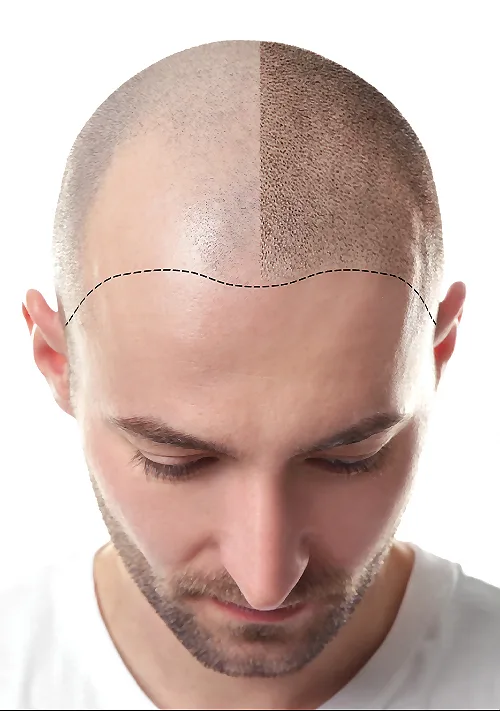
Scalp micropigmentation (SMP) is a cosmetic tattoo. An artist places very small dots of pigment into the upper layers of the scalp to imitate the look of hair follicles or short stubble. It works by reducing contrast, so thinning areas look denser and a shaved head looks like a full buzz cut. It does not affect hair growth.
A hair transplant is surgery. According to the American Academy of Dermatology, a dermatologist or surgeon removes healthy hair from a donor area, usually the back of the scalp, either as a strip or as individual follicles, and places it where hair is thinning. Those follicles can keep growing hair in their new spot. The AAD also notes that hair loss can continue after a transplant, so medication may be recommended to help keep the results.
How do the costs compare?
At Elite, SMP costs $1,500 to $3,000, depending on the area treated. Cleveland Clinic describes SMP as lower cost than hair transplant surgery.
Hair transplant pricing is set by each surgeon and is commonly based on the number of grafts. To give a sense of scale, the International Society of Hair Restoration Surgery 2025 Practice Census reports that its surveyed members averaged 2,347 grafts per session for a first procedure. When you get a transplant quote, ask for the per-graft price, the expected graft count and whether more sessions are likely, because multiple procedures are common. Neither SMP nor transplant surgery is usually covered by insurance when done for cosmetic reasons.
Side-by-side comparison
| Factor | Scalp micropigmentation | Hair transplant |
|---|---|---|
| What it does | Creates the look of follicles and density with pigment | Moves living hair follicles to thinning areas |
| Grows real hair | No | Yes, if grafts take |
| Procedure | Non-surgical, needle and pigment, topical numbing | Outpatient surgery under local anesthesia, sometimes sedation |
| Session length | About 3 hours per session at Elite | Several hours, often most of a day |
| Number of visits | Built up over more than one session | May need several procedures, months apart |
| Downtime | Keep the area dry for 24 to 48 hours; avoid sweat and sun while healing | Bandages, scabbing and swelling; return to work after several days |
| When you see the result | Right away, softening as it heals | Usually 6 to 12 months |
| Donor hair needed | No | Yes, enough healthy hair to move |
| Upkeep | Refresh every 3 to 5 years at Elite | Often medication to protect existing hair |
| Cost at a glance | $1,500 to $3,000 at Elite | Quoted by the surgeon, usually per graft |
What does recovery look like for each?
SMP recovery is short. Expect redness for a few hours. Keep the scalp dry for the first 24 to 48 hours, avoid heavy sweating, steam, swimming and direct sun while it heals, and do not pick at any flaking. Most people go back to normal routines quickly, with some extra care around the gym.
Transplant recovery takes longer. Cleveland Clinic outlines a typical timeline: bandages come off after a day, hair can be washed on day two, most people return to work and light activity within three to five days, stitches come out around day ten if a strip was taken, and exercise resumes after about three weeks. Scabs, itching, swelling and tightness are common at first. The AAD explains that transplanted hairs usually fall out between two and eight weeks after surgery, which is normal, and that most patients see results six to nine months after surgery, with some waiting up to twelve.
Which looks more natural?
Both can look natural in skilled hands, and both can look wrong when done poorly. A transplant gives you real hair with real texture and movement, which matters if you want length or a style you can push around. A badly planned transplant can leave an unnatural hairline or visible donor scarring.
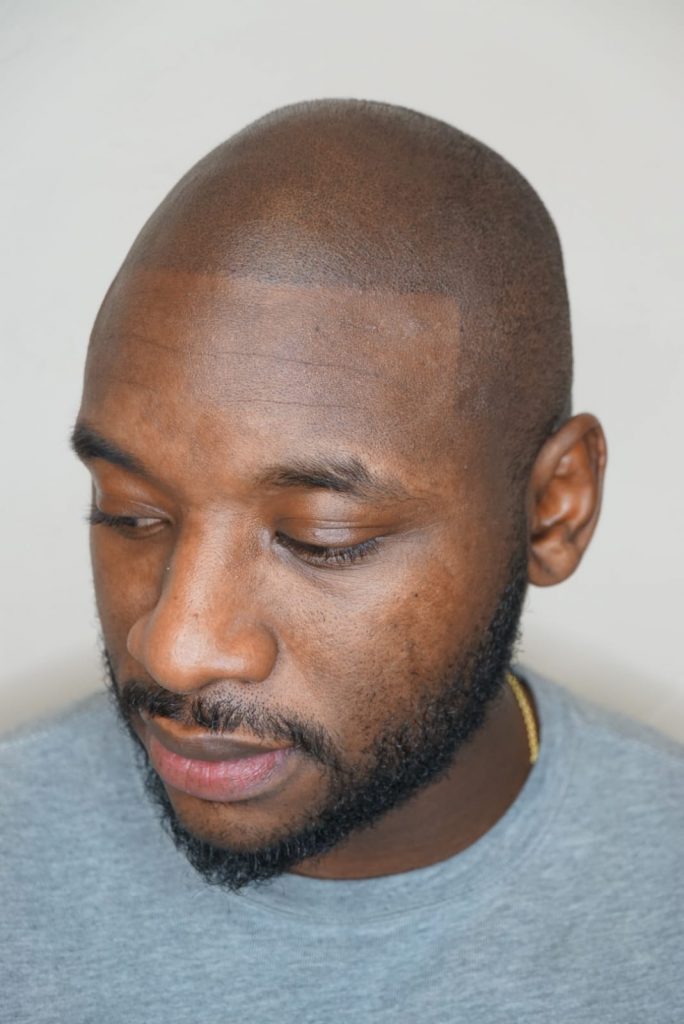
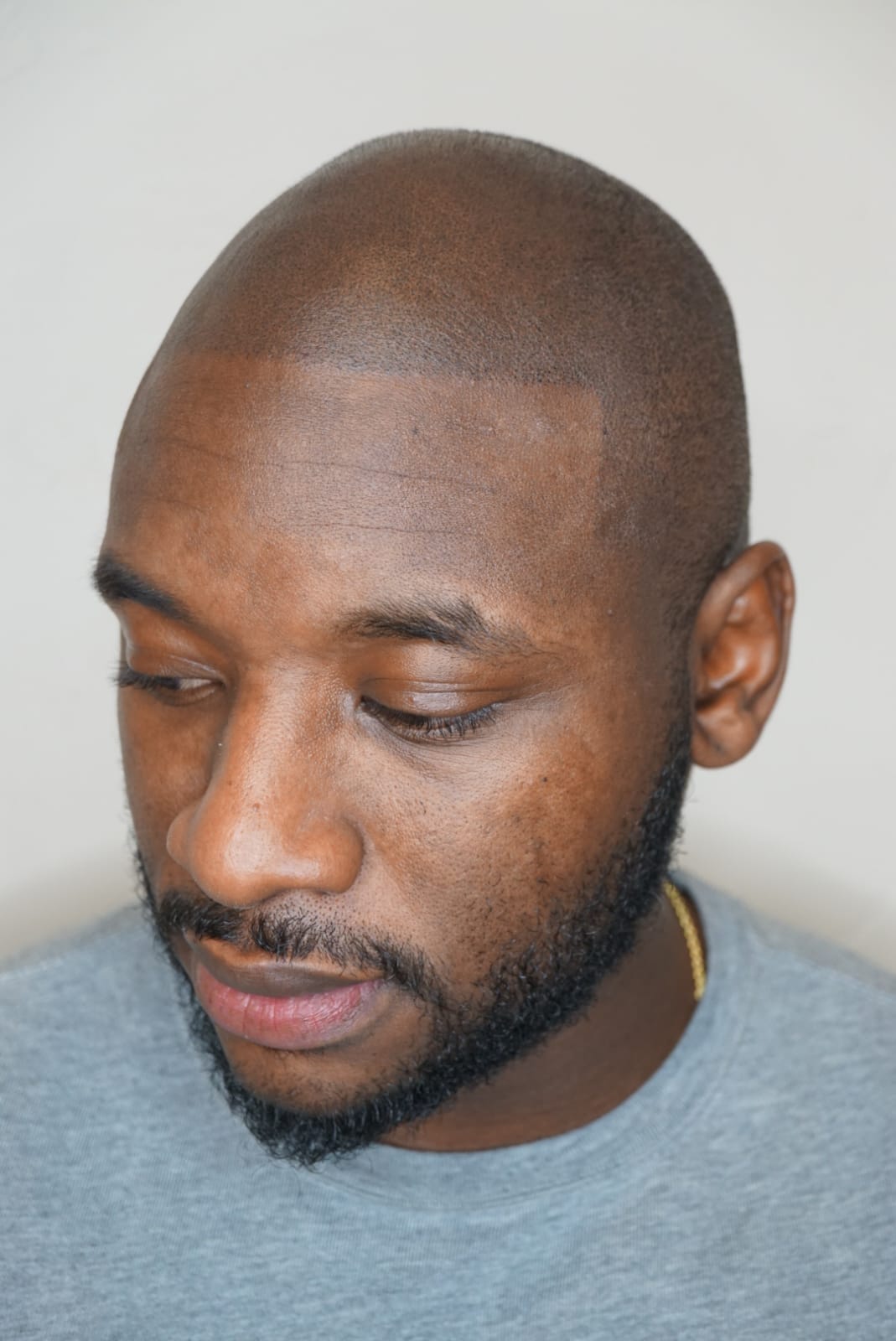
SMP looks most convincing as a close-cropped shaved style or as density under existing hair. It cannot give you length or volume. Poorly done SMP can look like a solid painted block, or the pigment can spread and shift toward blue over time. Healed results, not fresh photos, are the best way to judge an artist.
Who is each option best for?
SMP is often a good fit if you:
- Like a shaved or very short style and want it to look like a full head of stubble.
- Have diffuse thinning and want the scalp to show less under your hair.
- Do not have enough donor hair for a transplant.
- Want to avoid surgery, or cannot take time off for recovery.
- Have a transplant scar, such as a linear strip scar, you want to blend.
A transplant may be a better fit if you:
- Want real hair you can grow out and style.
- Have stable hair loss and enough healthy donor hair.
- Are in good general health and comfortable with surgery and a long wait for results.
Who should check with a doctor first: anyone with undiagnosed or sudden hair loss, an active scalp condition, a bleeding disorder, or a history of keloid scars. Cleveland Clinic lists a tendency to form keloids as a reason not to have SMP at all.
Can you combine SMP and a hair transplant?
Yes, and it is common. Some people have a transplant to restore the hairline and then use SMP behind it to add density where grafts are spread thinner. Others use SMP to camouflage the donor area or a strip scar. If you plan to do both, talk to your surgeon about timing. In general, the scalp should be fully healed from surgery before any pigment work, and your SMP artist should know about any planned procedures.
Exploring scalp micropigmentation at Elite
If you are leaning toward a non-surgical route, Elite Permanent Makeup and Cosmetology College in West Los Angeles offers scalp micropigmentation as a hair transplant alternative, for both density work and full hairline restoration. For a scar from an earlier procedure, our scar camouflage service may also help. A free consultation is the best place to compare your options honestly, and our aftercare guide shows what healing involves.
Frequently asked questions
Is SMP cheaper than a hair transplant in the long run?
It usually costs less upfront, but it needs a refresh every few years. A transplant has a higher upfront cost and may need more procedures or ongoing medication. Add up the full picture over ten years for your situation before deciding.
Can SMP be removed if I later want a transplant?
Pigment can be lightened, but it takes time and more than one visit. Ask your surgeon how existing pigment would affect planning, and tell your SMP artist if a transplant is on your radar so the work can stay conservative.
Does SMP damage existing hair follicles?
SMP pigment sits in the upper layers of the scalp and is not designed to affect hair growth. Cleveland Clinic notes it does not change natural hair growth.
How soon after a transplant can I get SMP?
That depends on how you heal and your surgeon’s advice. Most artists want the scalp completely healed and want to see how the grafts grow in before adding pigment.
Are women candidates for both?
Yes. The AAD notes that men and women can be good candidates for a hair transplant, and SMP density work is often used for women with a widening part or thinning crown.