On this page
Short answer: Microblading typically lasts one to two years before it fades enough to need a refresh. Plan on a perfecting session four to six weeks after your first appointment, then a refresh roughly once a year. Oily skin, sun, sweat and skincare acids shorten that window, while dry or normal skin with good sun protection lengthens it.
Those numbers are averages, not a countdown. Two people who book on the same day with the same artist can walk out a year later with very different brows, and the reasons are mostly predictable. Knowing them helps you plan your budget and decide when to come back.
What does “lasting” mean for microblading?
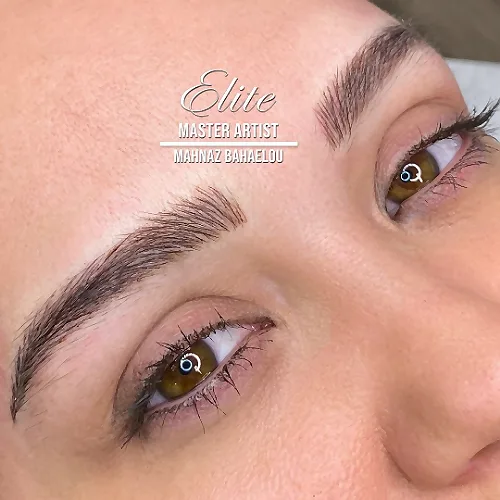
Microblading is semi-permanent. Pigment is deposited just beneath the skin’s surface, and your body slowly breaks it down and clears it away, while sun and skin turnover wear at it from the surface. It does not vanish all at once. Strokes gradually lighten, lose their crisp edges and thin out in places until the brows look soft rather than defined.
Most clients decide it is time for a refresh well before the pigment is gone, usually when the brows no longer look finished without a pencil. Faint traces can remain for longer, which is why color quality matters: the FDA points out that permanent makeup can fade and that changes in skin over time can affect how it looks.
What happens in the first six weeks?
The first weeks can be confusing, because brows change a lot before they settle. A typical timeline looks like this:
- Days 1 to 3: Brows look darker, sharper and bolder than the final result. Mild redness, swelling and tenderness are common.
- Days 4 to 10: The skin tightens, itches and begins to flake. Strokes may look patchy as flakes come off.
- Weeks 2 to 3: Brows can look surprisingly light, almost as if the pigment disappeared. This stage often worries people, but it is normal while new skin forms over the strokes.
- Weeks 4 to 6: Color comes back up and settles into its healed shade. Now you and your artist can see what held and what did not.
Our permanent makeup aftercare guide covers how to care for your brows at each of these stages.
Why does the 4 to 6 week perfecting session matter?
Skin does not accept pigment evenly. Some strokes heal beautifully, others fade more than expected, and the healed shade can be a touch lighter or warmer than planned. The perfecting session, booked four to six weeks after the first appointment, is when your artist fills in gaps, refines the shape and adjusts the color now that the skin has healed.
Skipping it is one of the most common reasons microblading seems to fade early. Without that second pass, thin or patchy areas tend to disappear first, and the brows can look uneven long before a full year has passed. Think of the first two appointments as one procedure in two steps.
What makes microblading fade faster?
Most of what shortens or extends microblading comes down to skin and habits rather than luck.
| Factor | Effect on longevity | What you can do |
|---|---|---|
| Oily skin | Strokes soften and fade sooner | Ask about powder or nano brows; plan earlier refreshes |
| Sun exposure | UV breaks down pigment and can shift its tone | Daily sunscreen on healed brows, hats outdoors |
| Retinol, acids, peels | Faster skin turnover lifts pigment | Keep actives off the brow area |
| Heavy sweating, swimming | More wear, especially in the first weeks | Follow healing restrictions; rinse after pools |
| Laser or facial treatments | Some can lighten or alter pigment | Tell your provider you have brow tattooing |
| Lighter pigment shades | Soft colors fade from view sooner | Expect more frequent refreshes for very light brows |
| Picking during healing | Pulls pigment out with the flakes | Let flakes fall on their own |
Sun deserves special mention in Los Angeles, where bright days run most of the year. The American Academy of Dermatology recommends a broad-spectrum, water-resistant sunscreen with SPF 30 or higher on tattooed skin, because UV light can fade some inks.
How often will you need a refresh after the first year?
Once the first two appointments are done, most people come back for a refresh about once a year, sometimes stretching to around a year and a half if their skin holds pigment well. At Elite, refresh pricing is quoted by the studio after your artist looks at your brows. For reference, a first microblading appointment is $350 to $700 depending on the artist level, and the second session four to six weeks later is $150 to $250.
Signs it is time to book:
- You are reaching for a brow pencil again to fill gaps.
- The front or tail of the brow has faded more than the middle.
- Strokes look blurred or soft rather than separate.
- The color looks noticeably lighter or has shifted warm or cool.
- Your brows look uneven from one side to the other.
Timing matters for cost, too. A refresh works best while there is still a clear shape to build on. If you wait until the brows have faded almost entirely, many artists treat the visit as a new full appointment. Our guide to microblading touch-up costs explains how refresh pricing is set.
How can you make microblading last longer?
You cannot stop fading, but you can slow it down:
- Follow aftercare closely in the first ten days or so, when pigment is most vulnerable.
- Keep the perfecting appointment, even if your brows look fine at three weeks.
- Use sunscreen on healed brows every day, not only at the beach.
- Apply retinoids, exfoliating acids and peel pads around the brows, never on them.
- Tell your facialist, dermatologist or laser technician about your brows before treatment.
- Book refreshes before the shape disappears, so each visit stays smaller.
If your skin is oily, a different technique may simply hold longer. Our powder and ombré brows tend to last better on oily skin than hand-drawn strokes.
At Elite Permanent Makeup and Cosmetology College in West Los Angeles, consultations are free, and your artist will look at your skin and lifestyle and give you a realistic idea of how long your brows are likely to last. Learn more about our microblading in Los Angeles, including what happens at the first appointment and the perfecting session.
Frequently asked questions
Can microblading change color as it fades?
It can. Depending on the pigment, your skin and sun exposure, faded strokes may look ashy, grayish or slightly warm. Quality pigment chosen for your undertone lowers that risk, and a refresh with the right color usually brings brows back to a natural shade.
Does microblading ever disappear completely?
For many people it fades to the point of being barely visible after a few years without refreshes, but faint traces can remain. That is one reason to choose an experienced artist and a shape you will be comfortable with long term.
Can I go to a different artist for my annual refresh?
Yes, though the new artist will need to assess the existing pigment, shape and color first. Work started by another artist may take more time to adjust, and it can affect the price.
Is it possible to refresh too often?
Yes. Adding pigment before it is needed can build up color and make strokes look heavy or blurred over time, and repeated work on the same skin needs healing time in between. Let your artist judge when there is enough fading to justify a refresh.
Should I mention microblading before an MRI?
Yes. The FDA advises telling your radiologist or technologist about permanent makeup before an MRI. Reported problems are rare, and the FDA notes that skipping a needed scan is usually the bigger risk.