On this page
Short answer: Microblading usually suits dry to normal skin and people who want soft, hair-like strokes. Powder brows suit oily, combination or mature skin and anyone who likes a filled-in, made-up look. Nano brows sit between them: machine-drawn hair strokes that tend to hold better than microblading on oilier or thinner skin.
All three are semi-permanent brow tattoos. Each one places pigment in the upper layers of the skin, and each one fades over time. What separates them is how the pigment goes in and what the healed brow looks like, and your skin type has more say in that healed result than most people expect. Here is how an experienced artist works through the decision with a client.
How do microblading, powder brows and nano brows differ?
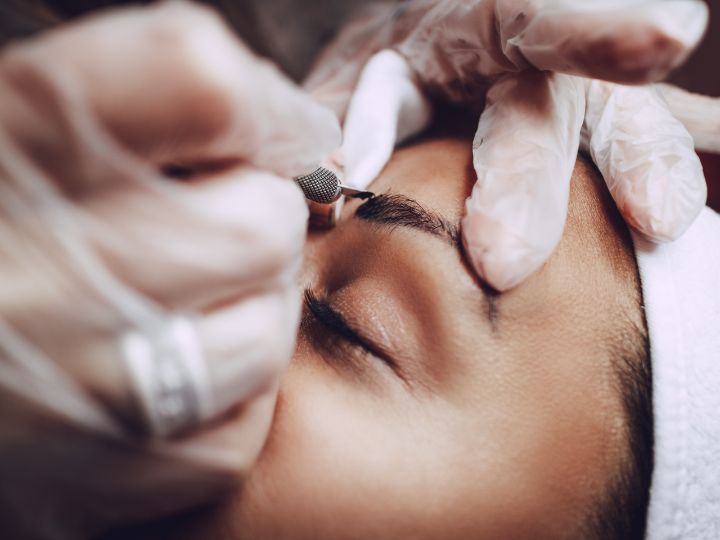
Microblading is done entirely by hand, with a small blade made of fine needles that etches thin strokes shaped like individual hairs. Powder brows, also called ombré brows, use a machine to lay down tiny dots of pigment that build into a soft shaded finish, usually lighter at the front and deeper toward the tail. Nano brows also use a machine, but the artist draws hair strokes with a single ultra-fine needle instead of shading.
| Feature | Microblading | Powder / ombré brows | Nano brows |
|---|---|---|---|
| Method | Hand tool, hair strokes | Machine, shading | Machine, hair strokes |
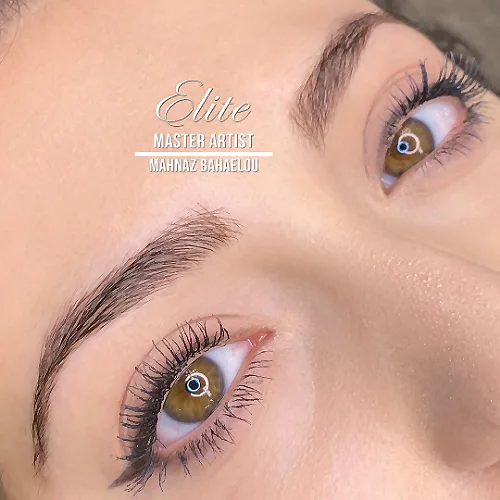
| Healed look | Soft, natural strokes | Filled-in, powdered finish | Fine, defined strokes |
| Strongest skin match | Dry to normal | Oily, combination, mature | Most types, including oily and thin |
| Upkeep | Refresh about every 1 to 2 years | Usually the longest between refreshes | Usually holds longer than microblading on oily skin |
| Elite first appointment | $350 to $700 by artist level, about 2 hours | $350 to $700 by artist level | $650 to $850 by artist level, about 3 hours |
| Elite second session | $150 to $250 | $150 to $250 | $300 to $400 |
Whichever you choose, plan on a second session about four to six weeks after the first appointment, once the skin has healed and your artist can see exactly what held. At Elite, both appointments are priced by artist level, with Grand Master Mahnaz Bahaelou at the top of each range ($700 for microblading or powder brows, $850 for nano brows).
Which technique works best for dry or normal skin?
Dry and normal skin is where microblading shines. With little surface oil and small pores, hand-drawn strokes tend to heal crisp and stay separate, so the brows read as real hair even up close. If your brows are sparse but you still have some natural hair, microblading fills the gaps in a way that blends with what is already there.
Dry skin is not a free pass, though. Very dry or flaky skin can heal patchy if it is not kept lightly moisturized while it heals, and people with dry skin often use exfoliating or anti-aging products that speed up fading. Powder and nano brows also heal well on dry skin, so for this group the choice comes down mostly to the look you want rather than what your skin can hold.
What should you choose if your skin is oily or combination?
Oil is the most common reason microblading strokes blur. Sebum and larger pores let pigment spread slightly as the skin heals, so fine lines can soften into a hazy shape and fade sooner. That does not make microblading impossible on oily skin, but the healed result is less predictable and refreshes tend to come around faster.
Powder brows are usually the safer pick for oily skin, because a shaded finish has no fine lines to lose. If the pigment softens, it still looks like intentional powder. Nano brows are the answer for oily-skinned clients who still want strokes, since a machine needle places pigment more consistently than a hand blade. Combination skin, oily through the T-zone and normal elsewhere, generally behaves like oily skin at the brow, because the brows sit at the top of that zone.
Not sure where you fall? Wash with a gentle cleanser, skip every product, and check your forehead and brow area after an hour or two. A visible shine there, especially by midday, usually means oily.
What about mature, thin or sensitive skin?
As skin ages it tends to get thinner and less elastic, and fine hand-cut strokes can spread or heal unevenly on it. Many artists steer mature clients toward powder or nano brows, which can be built up gradually in light passes. A soft powder finish has a practical upside, too: it adds definition where brow hair has thinned with age without needing perfectly matched strokes.
Sensitive or reactive skin needs an honest conversation before any technique. Redness that lingers after facials, a history of contact allergies, or skin that scars easily are all worth mentioning at the consultation. If you are prone to keloids or have psoriasis or eczema, talk with a dermatologist first; the American Academy of Dermatology notes that tattooing can trigger flares of some skin conditions and raised scars in people prone to them.
How should your lifestyle change the choice?
Skin type narrows the field. Daily habits usually make the final call.
- You rarely wear makeup. Microblading or nano brows give a bare-faced, natural look. A strong powder brow can look a little done-up on a makeup-free face, although a soft ombré helps.
- You fill in your brows every day. Powder brows match that habit and retire the pencil. Many people who love a defined brow find hair strokes alone too subtle.
- You train hard, swim or sweat a lot. Sweat and chlorine both break pigment down faster. Powder and nano brows generally hold up better than microblading under heavy sweating.
- You spend a lot of time outdoors. Southern California sun fades every technique. Daily sunscreen on healed brows matters more than the method you pick.
- You use retinol, acids or regular peels. These speed up fading, especially for fine strokes. Keep them off the brow area or expect to refresh sooner.
- You want the lowest upkeep. Microblading usually needs the most frequent refreshes, while powder brows typically go the longest between visits.
Who should wait or check with a doctor first?
Brow tattooing breaks the skin, so some situations call for patience. Most artists will postpone if you are pregnant or breastfeeding, or if you have an active breakout, sunburn, cold sore or rash near the brows, or are still healing from a peel, laser or injectable treatment in the area. If you take blood thinners, are on or recently finished isotretinoin, are going through chemotherapy, or live with diabetes, an autoimmune condition or a heart condition, ask your doctor whether and when it is safe. Never stop a prescribed medication on your own to fit an appointment.
It is also worth knowing the general safety picture. The FDA advises choosing facilities that use sterile equipment and do not reuse ink, and telling your radiologist about any permanent makeup before an MRI.
How does an artist help you decide?
A good consultation should feel like a fitting, not a sales pitch. Expect your artist to:
- Look at your skin in good light, checking oil, pore size, thickness and any scarring around the brows.
- Ask about your routine: makeup, skincare actives, workouts and sun exposure.
- Show healed results, not only fresh ones, for each technique on skin like yours.
- Draw a shape on your face before any numbing or pigment, and adjust it with you.
- Explain the follow-up visit and how often you are likely to need a refresh.
Elite Permanent Makeup and Cosmetology College in West Los Angeles offers all three techniques, and consultations are free. If your skin and goals point toward hair strokes, start with our microblading service in Los Angeles. If they point toward shading or machine strokes, compare powder and ombré brows with nano brows, or book a free consultation and decide in person after seeing healed work in our portfolio.
Frequently asked questions
Can I switch from microblading to powder brows later?
Usually, yes. Once microbladed strokes have faded or softened, many artists can shade over them with a powder technique, which is a common path for clients whose skin turned out oilier than expected. If the old pigment has shifted to a warm or cool tone, it may need to be corrected or lightened first.
Is there a style that mixes strokes and shading?
Many artists offer a combination brow, with hair strokes at the front and soft shading through the body and tail. It suits people who want a natural-looking front with more definition overall. Ask whether your artist recommends it for your skin and how it will age.
Which option is the most comfortable?
Comfort varies more by person than by technique. A topical numbing cream is applied before the work, and most clients describe the sensation as uncomfortable rather than painful. Some find the steady hum of a machine easier to sit through than the scratching feel of a hand tool.
Do all three look darker right after the appointment?
Yes. Fresh pigment sits in healing skin, so brows look bolder and sharper for the first week or so, then lighten as the skin flakes and settles. The healed color usually shows after a few weeks, which is why the follow-up visit is booked once healing is complete.
Does skin tone change which technique I should pick?
Skin tone affects pigment choice more than technique. An experienced artist picks a pigment with the right undertone so healed brows do not turn too warm or too cool on your skin. All three techniques can work across skin tones when the color is matched well.