Inkless
Inkless works on texture: controlled micro-injury and serums that prompt the skin to rebuild collagen, so indented or textured marks smooth out over several sessions.
Inkless treatment to improve texture, or pigment camouflage to match color — chosen for your marks at a free consultation.
Minimum wait before treatment
Between sessions
Consultation
The honest goal is to make the marks hard to notice.
Inkless Stretch Mark procedures involve using a tattoo machine & an inkless serum to create controlled micro-injuries to the skin. The serums used often contain ingredients like vitamin C, hyaluronic acid, and retinal, which can help to improve skin texture, boost collagen production, and fade discoloration.
The combination of the serum & micro-injuries stimulate the body’s natural healing response, promoting elastin production and helping to improve skin texture and reduce the appearance of stretch marks. Stretch mark camouflage with pigment may be a better option for those with darker stretch marks or those who want more immediate results, as the pigment can provide instant coverage.
However, pigment may fade over time and may require touch-ups to maintain the desired appearance. Inkless Stretch Marks can take longer to see results but have proven to provide longer-lasting improvements to the skin’s texture and appearance.
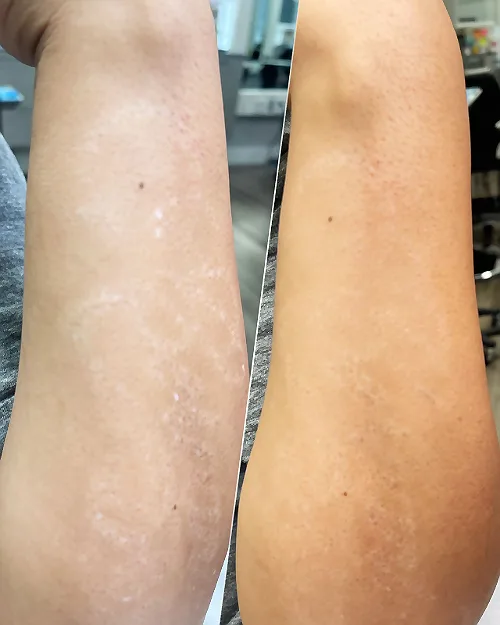
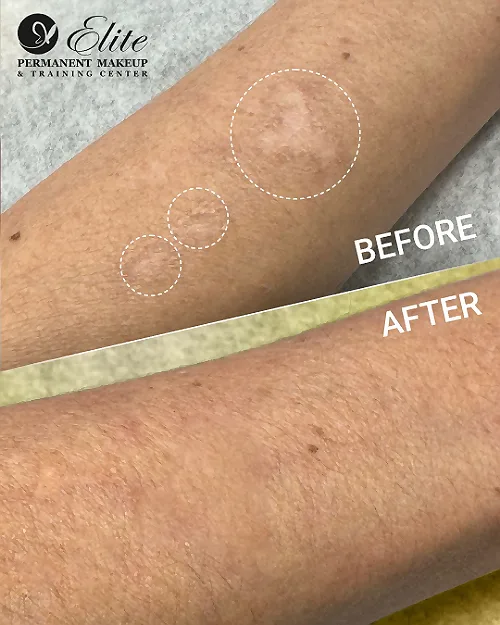
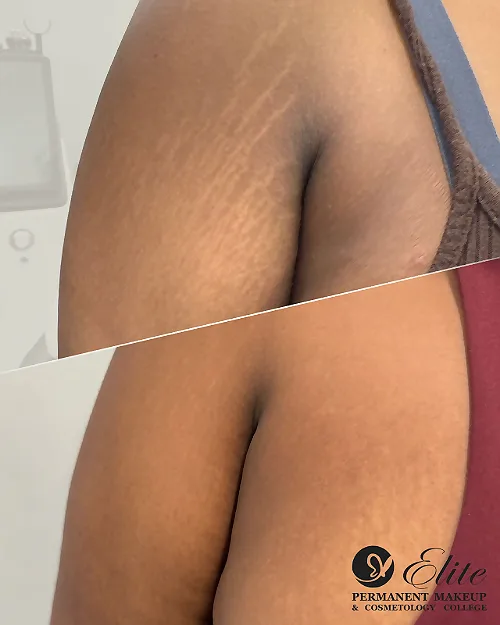
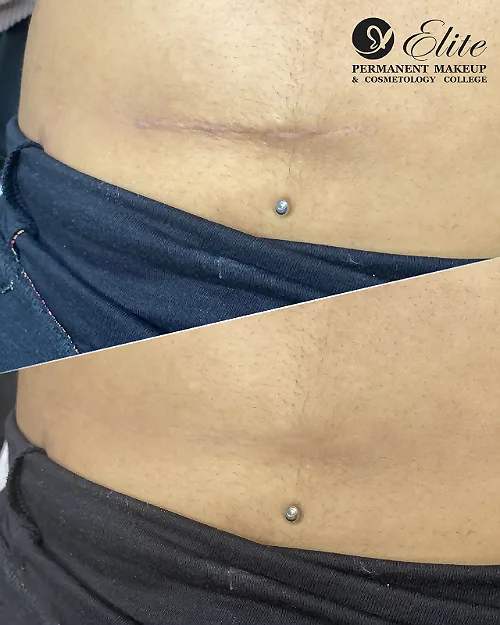
The two approaches solve different problems.
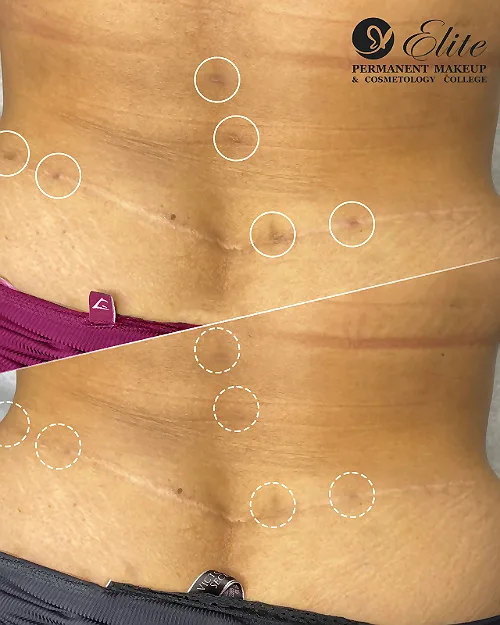
Inkless works on texture: controlled micro-injury and serums that prompt the skin to rebuild collagen, so indented or textured marks smooth out over several sessions.
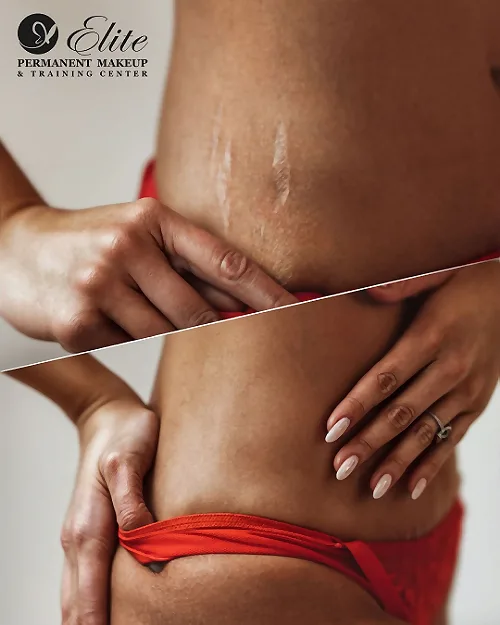
Pigment camouflage works on color, matching pigment to the skin around the mark so it stops standing out, which is the right answer for marks that are already flat but paler than the skin around them.
Marks that are still red, purple or dark are too new for either. They need to mature first, which is the reason for the one year rule.
Neither approach erases a stretch mark, and anyone promising removal is overselling. The honest goal is to make the marks hard to notice: closer in color, closer in texture, less visible in ordinary light. Most people get a meaningful improvement over a course of sessions, and some skin responds better than others, which is exactly why we would rather show you what your skin does before you commit.
Start with a consultation, which is free. Ask about a patch test while you are there. Stretch mark tissue is scar tissue and does not take pigment or respond to needling the way ordinary skin does, so a small test tells you more than any photograph can.
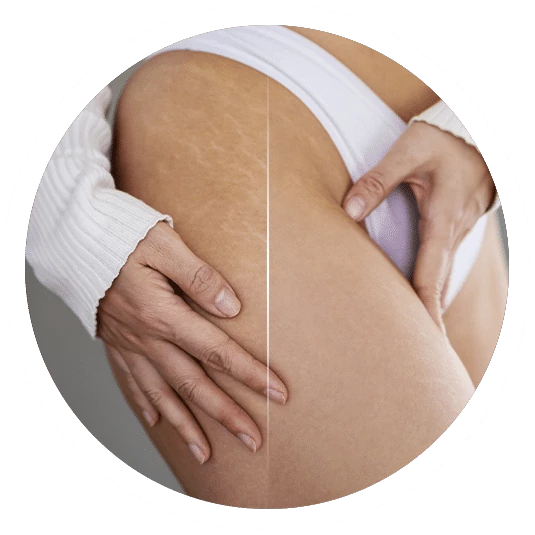
Stretch marks often appear lighter than the surrounding skin; camouflage evens out the tone so they’re much less noticeable.
Unlike creams that require constant application, results last for years.
Whether on the stomach, thighs, hips or breasts, treatment helps you feel more comfortable in your own skin.
No surgery, no lasers and minimal discomfort — just a pigmentation process that blends with your skin.
A consultation ensures pigments match your exact skin tone for a seamless blend.
Using a specialized PMU device, pigments are deposited into the stretch marks. The process is painless for most clients, though some may feel mild discomfort.
Healing takes about 4–6 weeks, with some slight fading as pigments settle. Keep the area moisturized, avoid direct sun exposure, and follow up with touch-up sessions for best results.
Pigment camouflage results typically last 3 to 5 years, depending on your skin type, sun exposure and lifestyle.
We change people’s lives.
It is recommended that clients wait for a minimum of one year after the appearance of stretch marks before undergoing any treatment for them. Treating stretch marks that have not yet fully healed can result in the formation of additional scar tissue.
Stretch marks can vary in size, shape, and severity depending on factors such as genetics, age, weight fluctuations, and pregnancy. Some stretch marks may be narrow and faint, while others may be wider and more noticeable. While some people may see noticeable improvements in the appearance of their stretch marks after just one treatment session, others may require six sessions to achieve the desired results.
It’s important to note that while treatments can help to reduce the appearance of stretch marks, they may not completely eliminate them. However, many people find that these treatments can significantly improve the texture and tone of their skin, giving them more confidence and a smoother, more even complexion. Come on in for a consultation with one of our Master Artists to see how many sessions you need!
It is recommended to wait at least 8 weeks in between treatments to allow the skin to fully heal.
“It works on any stretch mark.”
The technique is most effective on mature, lighter-colored stretch marks.
“The results are immediate.”
The color takes a few weeks to fully develop as the skin heals.
“It’s just like a tattoo.”
PMU uses skin-safe pigments designed to fade naturally over time, unlike traditional tattoo ink.
This is the same family of work as scar camouflage for surgical, burn and self-harm scars, and areola reconstruction after mastectomy, reduction or top surgery. Artists who want to offer all three can train with us in paramedical tattooing.
Visit Elite at 11961 Santa Monica Blvd, Los Angeles — or call our team with any questions before you book.